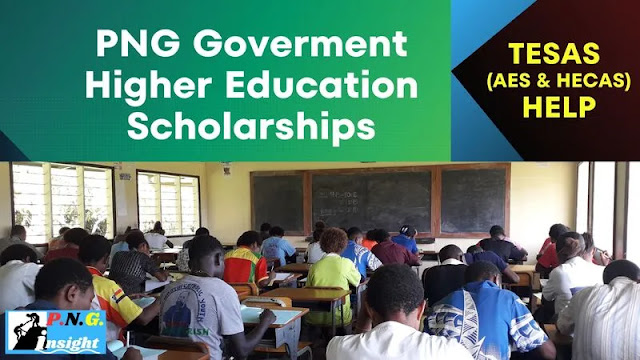
The Papua New Guinea government offers scholarships to help talented students pursue higher education. The TESAS and HELP programs provide financial assistance to deserving individuals, regardless of their academic background or financial situation. These scholarships offer a gateway to academic success and career opportunities for PNG students.
PNG Higher Education Scholarships Two Key Components
The three key components of the Tertiary Education Student Assistance Scheme (TESAS) are the:
- Academic Excellence Scholarships (AES) and
- Higher Education Contribution Assistance Scheme (HECAS).
These scholarships, collectively known as the TESAS, aim to support academically brilliant students and facilitate their academic development.
Find out how to calculate GPA here.
AES: Recognising Academic Excellence (1)
The AES is awarded to students with exceptional academic performance throughout their studies, typically with a high GPA. These scholarships provide a full tuition waiver, accommodation allowance, and a modest living allowance.
By recognising and rewarding academic excellence, AES empowers students to pursue their passions and contribute positively to PNG's future.
HECAS: Addressing Financial Burdens (2)
The HECAS, on the other hand, is designed to assist students who may face financial constraints while pursuing higher education. These scholarships cover a portion of tuition fees, reducing the financial burden on students and their families.
HECAS ensures that financial limitations do not hinder students from pursuing their academic aspirations.
Here is a guide for Self-sponsored students to secure TESAS, click here to get more information.
Gender Equity Scholarships (3)
The Gender Equity Scholarship was created to promote gender balance in higher education. It encourages women who have completed high school to pursue bachelor's degrees in fields where they are currently underrepresented.
This merit-based scholarship is only open to women who have been accepted into an approved bachelor's degree program. The scholarship is only for the first year of bachelor's degree studies, but successful recipients will be considered for AES or HECAS scholarships in subsequent years.
Only 50 scholarships are awarded each year, and the eligible fields and programs are announced in October.
Benefits of TESAS Scholarships
The TESAS scholarships offer a multitude of benefits to PNG students:
1. Financial Support: Scholarship recipients receive financial assistance, easing the financial burden and allowing them to focus on their studies.
2. Scholarly Excellence: AES recipients are recognised for their academic achievements, fostering a culture of excellence and motivation among students.
3. Access to Higher Education: Both AES and HECAS provide opportunities for students from diverse backgrounds to access higher education, regardless of their financial circumstances.
4. Career Advancement: By providing a strong educational foundation, TESAS scholarships empower students to pursue careers that contribute to PNG's socioeconomic development.
Guiding Principles for TESAS Scholarships
The PNG Higher Education Ministry through DHERST upholds several guiding principles when administering TESAS scholarships:
1. Merit-Based Evaluation: Scholarships are awarded based on academic merit, ensuring that deserving students receive recognition and support.
2. Transparency and Accountability: The scholarship process is transparent and accountable, ensuring fairness and adherence to established guidelines.
3. Continuous Improvement: The TESAS program is constantly evaluated and refined to ensure its effectiveness in supporting students and fostering educational excellence.
The Role of HELP Studentship Program
In addition to TESAS, the PNG government introduced the HELP Student Loan Program (Higher Education Student Loan Program) to further support students pursuing higher education.
This loan program provides financial assistance to students who do not qualify for TESAS scholarships. The HELP program aims to bridge the financial gap and ensure qualified students are allowed the opportunity to pursue higher education.
The HELP student loan program is:
- a new student loan program that offers interest-free loans to students who are enrolled in a higher education institution in Papua New Guinea.
- designed to be more affordable and manageable than standard loans, and it offers a repayment grace period after graduation.
- a great way for students to start building their credit history.
- a valuable resource for students who need financial assistance to attend college or university.
Students do not need to repay their HELP loans until they graduate, and they will have six months to find a job before payments begin.
To find out about How to Apply for the HELP Student Loan Program, click here
Conclusion
TESAS, AES, HECAS, and HELP are the PNG government's initiatives to empower PNG's youth to pursue their academic aspirations and contribute to the nation's development.
These programs play an important role in fostering a well-educated and skilled workforce, laying the foundation for PNG's continued progress and prosperity.
This is an UPDATE of the article that first appeared here.