The Department of Higher Education, Research, Science, and Technology (DHERST) Online application system (NOAS) dates for the 2025 academic year have been released in NOAS Press Statement #2/2024. Students and schools should be aware of the dates between now and when the 2025 academic year admission selection list comes out.
Grade 12 students need to mark these dates in their calendars and start planning ahead. When the time comes, they can adjust their NOAS applications early in anticipation of the selection for 2025.
Updated Important Dates for 2024 Selections
Release of Exam Results: 5th December 2024
NOAS Grace Period: Commences on Monday, 9th December 2024 at 12:01am and ends on Saturday, 14th December 2024 at 11:59pm
Launching (Selection Day) of 2024 Selection for 2025 Academic Year: Wednesday, 18th December 2024
Admission Selection List Publication: Date not announced yet (last year's publication was on Saturday, 23rd December 2023)
Here is an article about why it is important to get your choices on the NOAS online application right.
DHERST NOAS Online - 2024 Key Dates (UPDATED)
Here are the key dates in reverse order:
2025 academic year admission selection list publication – NOT ANNOUNCED, but here is last year's publication date - Saturday 23rd December 2023
Launching (SELECTION DAY) of 2024 Selection for 2025 academic year - WEDNESDAY 18th December 2024
NOAS Grace period – commences on MONDAY 9th December 12:01am - and ends on SATURDAY 14th December, 11:59pm.
Release of EXAM Results 5th DECEMBER 2024
Grade 12 National Examination – October 14th - 18th, 2024. (DONE)
NOAS application period begins – All Grade 12 students should have now obtained their National Online Application (NOAS) credentials from the school principal and patrons (ONGOING)
Click hereto read more about the 2024 Grade 12 Selection Launching Date & Publication Date.
What to Do During the Grade Period?
Important Update for Grade 12 School Leavers for 2024 applying to the HEIs for the 2025 academic year. The Grace Period for submitting your Higher Education program choices is only 5 days - commences on FRIDAY 2nd December 12:01am - and ends on FRIDAY 5th December, 11:59pm.
Check for RED lights: If any of your choices have a RED light, it means you didn't meet the minimum program requirements. Replace those choices with eligible programs.
No RED lights: If you don't see any RED lights, you meet the minimum requirements for your chosen programs.
Unused programs: Any programs you didn't meet the requirements for will be removed from your account.
National Online Selections: The DHERST Minister will launch the online selection process on the 16th of December, 2024.
Take Action: Use this extended Grace Period to review your choices carefully and ensure they align with your education goals and academic performance.
Grace period for NOAS
The grace period is a brief window after the Grade 12 students get their 2024 National Examination Results. It is an ideal time when students can adjust their school leavers choices on the NOAS application online.
For the Grade 12 students, this is a valuable chance to review your 2024 exam performance and other new information in the NOAS, and to make any necessary changes to improve your odds of being accepted into your preferred institution and program.
Papua New Guinea is a lower-middle-income country with a GDP per capita of *$2,708 in 2022. While this is lower than the global average, Papua New Guinea's GDP per capita has been growing steadily in recent years. The mining sector is the largest contributor to the economy, followed by agriculture, forestry, and fishing. However, the country faces a number of challenges to further development, including a large informal sector, high levels of poverty and inequality, limited access to basic services, poor infrastructure, and a challenging business environment. Despite these challenges, Papua New Guinea has the potential to achieve strong economic growth in the coming years. Policymakers can focus on promoting economic diversification, investing in infrastructure and social services, improving the business environment, and reducing poverty and inequality to boost GDP per capita and create a brighter future for all Papua New Guineans.
*The World Bank classifies countries as lower-middle-income if their GDP per capita is between $1,046 and $4,095. Papua New Guinea's GDP per capita of $2,708 is therefore in the lower end of the range for lower-middle-income countries.
The PNG LNG project has had a significant impact on Papua New Guinea's GDP per capita, boosting it by an average of 1.5% per year since 2014. It has also created jobs and reduced poverty, although this impact was largely evident during the development phase. Since then, the project has not generated as many new jobs or opportunities, but it has continued to generate tax revenue for the government.
Introduction
Gross domestic product (GDP) per capita is a measure of economic well-being. It is calculated by dividing the total value of all goods and services produced in a country (GDP) by the population. GDP per capita is often used to compare the living standards of different countries.
Papua New Guinea is a lower-middle-income country with a GDP per capita of $2,708 in 2022 (World Bank). This is lower than the global average of $12,241. However, Papua New Guinea's GDP per capita has grown by an average of 2.5% per year over the past decade.
Trends
The growth of Papua New Guinea's GDP per capita has been driven by a number of factors, including strong growth in the mining and construction sectors, as well as an increase in government spending on infrastructure and social services. The mining sector is the largest contributor to the economy, accounting for around 20% of total output. The other main sectors of the economy are agriculture, forestry, and fishing (16%), construction (12%), and wholesale and retail trade (11%).
Papua New Guinea's GDP per capita comparison
Composition
Papua New Guinea's economy is heavily dependent on the mining and oil and gas sectors. This makes the economy vulnerable to fluctuations in commodity prices. The government is working to diversify the economy and reduce its reliance on mining. However, this process will take time.
In addition to mining, Papua New Guinea has a significant agricultural sector. Agriculture employs around 80% of the population and contributes around 16% to GDP. However, agricultural productivity is low and many farmers live in poverty. The government is working to improve agricultural productivity and support farmers through programs such as the Special Agriculture and Business Lease (SABL) program.
Logging Special Agriculture and Business Lease (SABL) areas
Challenges
Despite recent economic growth, Papua New Guinea faces a number of challenges to further development. These challenges include:
A large informal sector, which is estimated to account for over 80% of the economy.
Limited access to basic services such as education and healthcare.
High level of systemic and sytematic corruption.
A challenging business environment.
High levels of poverty and inequality.
Poor infrastructure.
The informal sector is a major challenge for the Papua New Guinean economy. It is difficult to tax and regulate the informal sector, which limits the government's ability to raise revenue and provide services. The informal sector also deprives workers of important benefits such as social security and minimum wages.
High level of systemic and sytematic corruption
Poverty and inequality
Poverty and inequality are also major challenges for Papua New Guinea. According to the World Bank, around 40% of the population lives below the national poverty line. Inequality is also high, with the richest 10% of the population earning more than 40% of the country's income.
Papua New Guinea also faces a number of challenges in terms of access to basic services. The country has a high illiteracy rate and many people lack access to healthcare. Infrastructure is also poor, with many roads and bridges in need of repair.
Finally, the business environment in Papua New Guinea is challenging. The country has a complex regulatory environment and corruption is a problem. This makes it difficult for businesses to operate and invest in the country.
Prospects
Despite the challenges listed above, Papua New Guinea has the potential to achieve strong economic growth in the coming years. The country has a wealth of natural resources, a young and growing population, and a government that is committed to economic reform. If the government can successfully address the challenges listed above, Papua New Guinea can achieve significant progress in terms of economic growth and poverty reduction.
Conclusion
Papua New Guinea has made significant progress in recent years in terms of economic growth and poverty reduction. However, the country still faces a number of challenges, including a large informal sector, high levels of poverty and inequality, limited access to basic services, poor infrastructure, and a challenging business environment.
Policymakers can focus on promoting economic diversification, investing in infrastructure and social services, improving the business environment, and reducing poverty and inequality to boost GDP per capita and create a brighter future for all Papua New Guineans.
Recommendations
Here are some specific recommendations for policymakers in Papua New Guinea:
Promote economic diversification by investing in sectors such as agriculture, tourism, and manufacturing.
Invest in infrastructure and social services such as education, healthcare, and transportation.
Improve the business environment by reducing regulatory burdens and combating corruption.
Reduce poverty and inequality through targeted social programs and investments in human capital.
If the government can successfully address these challenges, Papua New Guinea can achieve significant progress towards its goal of becoming a high-income country.
Additional resources
Donor and reseaches
World Bank: Papua New Guinea Country Overview
International Monetary Fund: Papua New Guinea Country Report
Asian Development Bank: Papua New Guinea Country Profile
Papua New Guinea Government: Website
Papua New Guinea Institute of National Affairs: Website
Academic journals and books
Asian Development Bank. (2022). Papua New Guinea Economic Update 2022.
World Bank. (2022). Papua New Guinea Country Economic Memorandum: Building a More Resilient and Inclusive Economy.
Lowy Institute. (2022). Papua New Guinea: Economic Challenges and Opportunities.
Papua New Guinea Institute of National Affairs. (2022). Papua New Guinea Economic Outlook 2023
The Grade 10 Exam Results Release Date and Grade 11 selection process in Papua New Guinea (PNG) are important moments for students. It is when they find out if they can go to Grade 11.
The release of Grade 10 exam results and the Grade 11 selection is a three-month-long process that involves many different people, including the Department of Education, school principals, and provincial representatives.
This article will explain the timeline of events, the selection criteria, and why this process is so important for students, parents, and guardians.
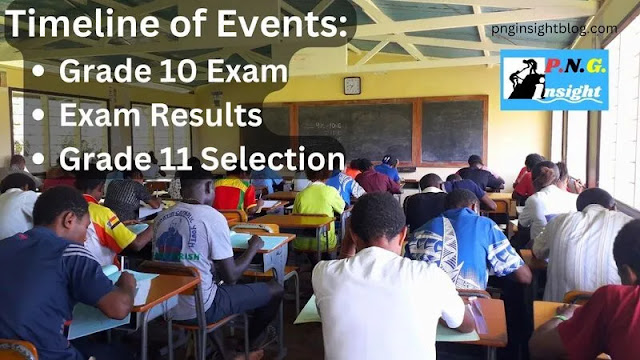
Timeline of Events: Grade 10 Exam Results Release Date, and Grade 11 Selection
Here is a step-by-step timeline of the key events related to the Grade 10 exam results and Grade 11 selection process:
October: National Examinations
Grade 10 students across PNG take their national exams in October each year.
The week after the exams, selected Grade 10 teachers in each province mark the exams and record the students' scores.
Provincial Examination Supervisors (PESs) and provincial marking committees coordinate the making in each province
The PES sends the Grade 10 results to the Measurement Services Division of the National Education Department in Port Moresby.
Click here to check out the expected release date of the Grade 11 Selection List by the Education Department.
November: Data Checks and Release of PNG Grade 10 Exam Results
In November, the Measurement Services Division (MSD) of the Department of Education checks the Grade 10 students' scores to make sure they are accurate.
This is a very important step because it makes sure that the student's information is correct before the results are released to the selections.
Once the MSD has checked the scores, they release the results for Grade 10 students to the Grade 11 selection committee and also publish the results online.
December: Grade 11 Selection
Two key education entities are involved in the Grade 11 selection process: the General Education Services (GES) of the Department of Education, and school principals or provincial representatives.
The MSD processes the Grade 10 exam results and makes them available online.
The GES and principals use these results to select students for Grade 11.
The selection process can take up to two weeks to finish.
Once the selection process is finished, the GES publishes the Grade 11 selection list on the Department of Education's website.
Grade 11 Selection: Weighted-Score System vs. Circumstance
Weighted-Score System
The weighted-score system is the primary method for selecting students for Grade 11 in Papua New Guinea. Students are assigned a weighted score based on their performance on the Grade 10 national exams, with higher scores given to more difficult subjects. Students with the highest weighted scores are selected for Grade 11, regardless of their province or other circumstances.
Watch this video to find out how the Education Department uses this system to select students.
Selection by Circumstance
In addition to the weighted score system, there are several other factors that can influence the selection of students for Grade 11. PNG Insight lists the 5 main factors below.
Academic performance:
A student's academic performance on the Grade 10 national exams is still a very important factor in the selection process, even if they are selected based on circumstance.
Number of spaces available:
There are only a limited number of spaces available in secondary and national high schools. Students may miss out on selection for Grade 11 even if they do not have the highest weighted scores.
Parental requests:
Parents and guardians can write to school principals to explain why they want their child to go to a particular school. Principals may consider parental requests when selecting students for Grade 11, but they are not obligated to do so.
Special circumstances:
In some cases, special circumstances such as family reasons or job transfers may allow principals to select students for Grade 11 at their schools. Principals may consider special circumstances when selecting students for Grade 11, but they are not obligated to do so.
Student preferences:
Students can indicate their preferences for secondary and national high schools on their School Leavers Forms (SLF). Principals may consider student preferences when selecting students for Grade 11, but they are not obligated to do so.
Significance of the Grade 10 Exam and Grade 11 Selection Process
The Grade 10 exam and Grade 11 selection process is a very important event in the lives of PNG students, parents, and guardians. The outcome of this process determines a student's eligibility to continue their secondary education and pursue their academic dreams.
For students, the Grade 10 exam and Grade 11 selection process is a crucial milestone in their academic journeys. It is a time for them to reflect on their academic progress and set goals for the future. It is also a time for them to seek support from their parents, teachers, and mentors.
For parents and guardians, the Grade 10 exam and Grade 11 selection process is a time of great anticipation and anxiety. They want their children to succeed and have the best possible opportunities for the future. However, they are also aware of the challenges that their children may face in the competitive selection process.
Conclusion
The Grade 10 exam and Grade 11 selection process in Papua New Guinea is a critical event that shapes the academic journeys of students. The transparency and fairness of this process, along with the dedication of educational authorities, ensure that deserving students receive the opportunities they need to achieve their goals in life.
------
Disclaimer
This information is based on PNG Insight's in-depth understanding of the exam process and workings of the education department's exams and selection process over the years. We are not affiliated with the education department, nor do we represent the department.
The education department does not publish the exact date for the release of the exam results and the Grade 11 selection list in the Education Calendar. It only announces the date when the results and selection lists are ready. That means that you will have to depend on news, social media, and PNG education website for the latest on Grade 10 (and Grade 8 and 12) results and selection.
Please note that this information is for informational purposes only and is not intended to be a substitute for official information from the education department.
In today's digital age, teachers can conveniently access their payslips online through the Papua New Guinea (PNG) Education Department's online portal, mypayslip.education.gov.pg. This article will guide you through the process of downloading your payslip using the website and app.
Downloading Your Payslip Using the mypayslip.education.gov.pg Website
The mypayslip.education.gov.pg website is designed to provide easy and quick access to teachers' payslips. Here are the steps to follow:
1. Open the mypayslip.education.gov.pg website on your preferred web browser. You can access the website from any device with an internet connection.
2. Click on the "Login" button in the top right corner of the homepage.
3. Enter your login details, including your username and password. If you have not yet registered, click on the "Register" button and follow the prompts to create your account.
4. Once you are logged in, you will see your dashboard. Click on the "Payslips" tab and select the current month. This will display your current month's payslip.
5. Click on the "Download" button to save the payslip to your device in PDF format. You can also print it out for your records.
Downloading Your Payslip Using the PNG Education Department App
The PNG Education Department has an app that teachers can download to access their payslips conveniently. Here are the steps to follow:
1. Go to the Google Play Store or Apple App Store and search for "PNG Education Department."
2. Download and install the app on your device.
3. Open the app and log in using your username and password. If you have not yet registered, click on the "Register" button and follow the prompts to create your account.
4. Once you are logged in, click on the "Payslips" tab and select the current month.
5. Click on the "Download" button to save the payslip to your device in PDF format. You can also print it out for your records.
Tips for Downloading Your Payslip
Make sure you have a stable internet connection before downloading your payslip.
Choose a safe and secure location to save your payslip.
Back up your payslip regularly to avoid losing important information.
Review your payslip carefully to ensure that all the information is correct.
The mypayslip.education.gov.pg website and the PNG Education Department app provide teachers with a convenient and easy way to access their payslips online. By following the steps outlined in this article, you can easily download your payslip from either platform.
Find out about the latest on PNG Teachers Pay increase, click here.
Papua New Guinea (PNG) is a developing country with a young and growing population. The economy is largely resource-based, with mining, oil, and gas accounting for a significant share of GDP. However, the country also faces a number of challenges, including poverty, inequality, and corruption.
This article presents a contrarian view of development in PNG, with politics at the centre of the discussion. It argues that the country needs a fresh perspective on development, one that is driven by visionary and humble leadership.
Highlights and Lows of the Past 50 Years
The first two decades (1960s - 1980s) of PNG's independence showed immense promise. The economy was booming, and the Kina stood at par with the US dollar.
Roads, infrastructure, and essential services were being built. However, from the mid-1980s to 1990s, the country's trajectory took a sharp turn as certain political leaders deviated from the development path, plunging PNG into a downward spiral.
Politicians Leading with Humility
One glaring issue that has plagued PNG's development is the stark contrast between the privileges enjoyed by politicians and the struggles faced by ordinary citizens. Politicians often seek medical treatment and education abroad, perceiving local facilities as inferior. This attitude needs to change.
To drive a contrarian approach to development, politicians should attend local hospitals, send their children to provincial high schools, and invest in the development of local facilities. This would demonstrate a commitment to public service and send a powerful message to the people.
Power to Transform
To bridge the gap between political privilege and public hardship, legislation must be enacted to ensure that lawmakers, who hold the power to use public funds wisely, lead by example.
Lawmakers need to realise that they can provide the best health and education services in PNG without going overseas. When they build it at home, everyone can enjoy its benefits.
In the next 50 years, one significant change that should take place is that politicians must "feel powerless." This may sound counterintuitive, but it means that they should operate within the bounds of the law and the judiciary, free from a sense of entitlement or immunity. This shift towards accountability and responsibility is essential for sustainable development.
Service Over Wealth: The Humble Path to Progress
To serve the people effectively, politicians must be driven by a deep love for their constituents. This entails sacrificing personal wealth and humbling themselves to prioritise the welfare of the nation over personal gain.
A modest salary relative to doctors, nurses, and teachers reflects a commitment to public service. Politicians can lead by example and prioritize the welfare of the people by:
Using local services, such as hospitals and schools.
Empowering law enforcement bodies to hold them accountable.
Accepting a salary that is comparable to other essential workers.
Respecting the rule of law and the independence of the judiciary.
Putting the needs of the people ahead of their own personal interests.
Remember that a higher pay packet does not equate to serving the people well. By taking these actions, politicians can make a real difference in the lives of their constituents and help to build a better future for their country.
Conclusion
As Papua New Guinea looks back on 50 years of independence and ahead to the next half-century, it is evident that a fresh perspective on development is urgently needed. Politicians must lead by example, focusing on building local infrastructure, feeling accountable to the law, and prioritising the welfare of the people.
It is only by taking this contrarian approach that PNG can embark on a more sustainable and equitable path to development.
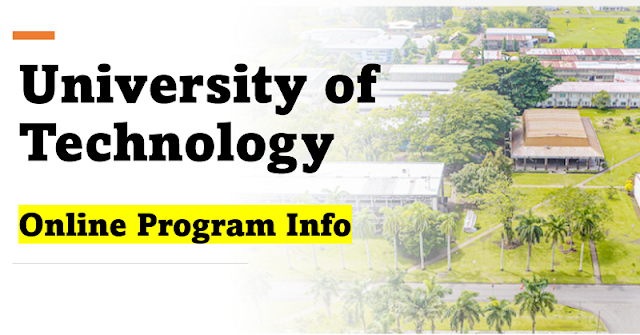
The Papua New Guinea University of Technology (PNGUOT) is offering online studies for the 2024 Academic Year. This is a great opportunity for students who want to study at a prestigious university without having to relocate to Papua New Guinea.
This information is from PNGUOT, reposted here for PNG Insight readers. Follow the links to the university's website for more information.
Online Courses Offered
PNGUOT offers a variety of online courses, including:
Bachelor of Arts in Communication for Development
Bachelor of Business in Accountancy
Bachelor of Business in Applied Economics
Bachelor of Business in Information Technology
Bachelor of Business in Management
Bachelor of Science in Applied Mathematics
Bachelor of Property Studies
Bachelor of Construction Management
Note these courses are offered online only!
Benefits of Studying Online
There are many benefits to studying online, including:
Flexibility: You can study at your own pace and on your own schedule.
Affordability: Online tuition is often less expensive than traditional tuition.
Accessibility: You can study from anywhere in the world with an internet connection.
Quality: PNGUOT is a highly respected university, and its online programs are just as rigorous as its on-campus programs.
How to Apply
To apply for online studies at PNGUOT, you will need to visit the university's website and create an account. Once you have created an account, you will be able to access the online application form.
LOCATION: ONLINE
DELIVERY MODE: ONLINE
STUDY DURATION: 4 YEARS
ELIGIBILITY: To be eligible for online studies at PNGUOT, you must have a Grade 12 Higher School Certificate or equivalent with minimum required grades.
Entry requirements are the same for online students as for on-campus students.
Recent passport size photo that is clear (scanned in .pdf format). Applications lacking photos or with poor ones will be rejected.
Application payment receipt (scanned).
Academic record transcripts/certificates that show grades/achievements (high school, college/university studies, vocational training, distance/open learning courses).
All these documents must be officially certified within the current year (2022-2023) by a registered COMMISSIONER OF OATHS employed by government (including district court houses).
Statutory Declaration Form are NOT accepted. Your entire application will be rejected if those assessments are not officially stamped by the Commissioner or if you use a Commissioner not employed directly by government.
Find two referees who are willing to fill out the form attached below. Referees must be established adults who are not close relatives but who know you and your capabilities well. Evaluations must be less than 2 years old. Referee‟s name and signature must be officially witnessed by a professional colleague from the same organisation and its seal/stamp inserted to officially certify the reference forms.
Any document/s produce after the application been submitted will NOT be accepted.
Comply with instructions given on this form because appeals will NOT be accepted if your application is rejected.
Apply Now
If you are interested in studying online at PNGUOT, please visit the university's website and create an account. Once you have created an account, you will be able to access the online application form.
Here are some additional tips for applying for online studies at PNGUOT:
Make sure that you have all of the required documents before you start the application process.
Take your time and complete the application carefully.
Be sure to proofread your application before submitting it.
If you have any questions about the application process, please contact the PNGUOT Online Admissions Office.
Warning
Any false, misleading, or altered information found on your application or attachments (we double-check with source schools) will PERMANENTLY BLACK-LIST you from ever studying at the PNG University of Technology.
The University of Goroka (UoG) is now accepting applications for re-enrolment for the 2024 academic year. Excluded and withdrawn students must submit additional documentation, such as a show-cause letter, medical certificate, or family reassurance letter. All applications must be submitted by the closing dates listed below.
This information is from UoG, reposted here for PNG Insight readers. Follow the links to download the application on the university's website
Check out the information about other PNG universities and colleges, click here.
Application Forms for the University of Goroka in 2024
Excluded Students must submit a show cause letter stating why they think they will do better if re-admitted, as well as names and addresses of two referees. They must also explain what they have been doing since leaving campus.
Withdrawn Students who withdrew on medical grounds must submit a medical certificate from a doctor to certify that they are now medically fit to continue their studies. Students who withdrew due to family reasons must submit a re-assurance letter from their family stating that they can now continue their studies. Both groups of students must also provide names and addresses of two referees.
Important:
Emailed or faxed applications will not be considered.
Applications without a show cause letter will not be considered.
All required information in the application form must be filled in order for your application to be considered.
Re-enrollment Application Fee
The non-refundable re-enrolment application processing fee is K 50.00. You are to pay this into BSP Goroka Branch Account No. 1000751407 and attach the receipt of your payment with your name and program applying for clearly written on it.
Applications without this fee will not be processed.
You must confirm the bank details with UoG before making the deposit of payment.
University of Goroka 2024 Application Closing Date
Semester 1: 31st October 2023
Semester 2: 14th June 2024
Please complete the application form and return to:
The Chairman – Admissions Committee
The University of Goroka
P.O Box 1078
GOROKA: E.H.P
You must keep a copy for your reference. Follow up immediately with the university's students services to get the latest updates on your applications.
Visit UoG website for the original documents, click here.
In conclusion, if you are an excluded or withdrawn student who is interested in re-enrolling at the University of Goroka in 2024, please be sure to submit all of the required documentation by the closing date. You can download the application form from the links provided above.
If you have any questions, leave a comment below. alternatively contact UoG students service or the Administration directly.
To check out the 2024 application and admission information about other PNG universities and colleges, click here.
PNG Air, one of Papua New Guinea's leading airlines, offers various special fares throughout the year. These fares can be a great way to save money on your flight, especially if you are travelling during peak season or to a popular destination. Here are some insider tips to Find and Book PNG Air Special Fares.
Here is a guide on how to find and book PNG Air special fares in 2024:
1. Visit the PNG Air website
The PNG Air website is the best place to start your search for special fares. On the website, you can browse through a list of current promotions and discounts.
2. Check social media
PNG Air is active on social media platforms like Facebook, Twitter, and LinkedIn. Follow their official accounts to receive real-time updates on PNG Air Special Fares 2024, promotions, and travel tips.
3. Subscribe to the PNG Air email newsletter
To receive exclusive offers directly in your inbox, consider subscribing to PNG Air's email newsletter. This way, you'll be among the first to know about any new special fares for 2024.
4. Contact PNG Air sales offices
If you prefer a more personal touch, you can contact one of PNG Air's sales offices in Port Moresby, Lae, or Goroka. The sales staff can help you find the best special fare for your travel needs.
Once you have found a special fare that you are interested in, you can book it online or by contacting a PNG Air sales office or travel agent.
Here are some tips for saving money on PNG Air flights:
Be flexible with your travel dates. If you can travel on weekdays or during the off-season, you are more likely to find cheaper fares.
Book your flights in advance. Early booking (at least 6 months in advance) is often rewarded with lower fares.
Consider flying into or out of smaller airports. Smaller airports often have lower landing fees, which can translate into lower fares for passengers.
Take advantage of group rates. If you are travelling with a group of ten or more people, you may be eligible for a group discount.
Group Special Fares
If you're planning a group trip with ten or more people, PNG Air offers tailored group special fares. For group quotes and inquiries, contact them via email at Groups@pngair.com.pg.
Whether it's a trekking adventure, family reunion, sports event, cultural show, or festival, PNG Air has unbeatable options for your group's needs.
Popular PNG Air Special Fares
PNG Air offers a variety of special fares throughout the year, including:
Seasonal discounts: PNG Air often offers seasonal discounts on flights to popular destinations. For example, you may be able to find a discount on flights to the Kokoda Track during the trekking season.
Group rates: PNG Air offers group rates to groups of ten or more people. This is a great option for families, sports teams, and other groups travelling together.
Promotional offers: PNG Air sometimes offers promotional discounts on flights. These offers may be advertised on the PNG Air website or social media pages.
Contact PNG Air Sales Offices
If you prefer a more personal touch, you can visit one of PNG Air's sales offices in Port Moresby. Here are some of the key locations:
PNG Air, Vision City Sales Office:
Located at Level 1, Vision City Mega Mall, Waigani, this office is open from 9 a.m. to 9 p.m. Contact them at Ph: 7373 4250/7373 4251 or via email at vision.city@pngair.com.pg.
PNG Air, MMI Sales Office:
Situated on the Ground Floor, Champion Parade, Port Moresby, this office operates from 8 a.m. to 4:30 p.m. Reach them at Ph: 7411 2644/7550 0007 or email call.centre@pngair.com.pg.
PNG Air, Airport Plaza Sales Office:
Found at Jackson's Domestic Airport, 7 Mile, this office serves you on weekdays from 6 a.m. to 4:30 p.m. and on weekends from 6 a.m. to 2:30 p.m. You can contact them at Ph: 7373 7171/7373 7172 or email pmtkt03@pngair.com.pg.
Final words
PNG Air special fares can be a great way to save money on your flight to Papua New Guinea. By following the tips in this guide, you can find the best special fare for your travel needs and book your flight with confidence.
Important:Always purchase your tickets from PNG Air ticket offices or reputable travel agents. Do not buy any tickets from street vendors or individuals who claim to sell tickets on Facebook and WhatsApp groups.
The Chinese government has announced a new scholarship program for teachers and students at the Butuka School of Excellence in Papua New Guinea (PNG). The program, which will award 200 scholarships annually, is designed to strengthen educational ties between the two countries and promote cooperation and friendship.
To check out the latest notice from DHERST on 2024/2024 Chinese Scholarship, CLICK HERE.
200 Chinese Scholarship
The scholarship program will provide 100 scholarships for teacher exchange programs and 100 scholarships for student summer camp programs. This breakdown reflects the Chinese government's commitment to supporting all aspects of education in PNG, from professional development for teachers to enriching experiences for students.
The scholarships are open to teachers and students of all disciplines, but priority will be given to those who are studying or teaching in STEM fields, such as science, technology, engineering, and mathematics.
Applicants must also be citizens of Papua New Guinea and meet the academic and other requirements of the Butuka School of Excellence.
Chinese government's investment in education in PNG
The Chinese government's investment in education in PNG is a significant step forward in strengthening ties between the two countries.
The new scholarship program will provide talented teachers and students with the opportunity to learn and grow, and to contribute to the development of PNG's education sector.
Intention of the scholarship
The Chinese Government Scholarship for PNG Students is intended to:
Strengthen educational ties between China and PNG
Promote cooperation and friendship between the two countries
Support the development of education in PNG
Provide teachers with professional development opportunities
Provide students with enriching summer camp experiences
Support educational development in PNG
The scholarship program is a tangible demonstration of the Chinese government's commitment to supporting educational development in PNG. It is also a reflection of the strong ties between the two countries, and their shared commitment to a future of cooperation and friendship.
The National Examination and School Inspection Authority (NESA) of Rwanda has released the NESA 2024 Results. NESA is responsible for organizing and administering national examinations in Rwanda. The NESA exams assess students' knowledge and skills in various subjects, including mathematics, science, English, and Kinyarwanda.
Checking your NESA exam results is an important step in your academic journey. Your results can help you understand your strengths and weaknesses and inform your future academic decisions. There are two ways to check your NESA 2024 results: online and by SMS.
Dates for the details of the NESA exam results available here.
How to Check NESA 2024 Results Online*
1. Visit the NESA website: http://results.nesa.gov.rw
2. Select your exam level (P6, S3, S6 GE, TVET, or TTC)
If you have a question, please leave a comment below. We hope this information is helpful. Please do not hesitate to contact us if you have any questions.
Will Smith's National Geographic docu-series, Welcome to Earth, celebrates our planet's natural wonders. The series takes viewers on epic journeys to some of the most remote and awe-inspiring places on Earth, where Smith explores the planet's unique ecosystems and learns about the forces that drive it.
Will Smith in PNG and Vanuatu
In 2021, Smith visited Mount Yasur volcano on Tanna in Vanuatu. The volcano is one of the most active in the world, and its eruptions are so regular that it's known as the "world's most accessible active volcano." Visitors can come right up to the edge of the crater and witness the lava flowing and the ash spewing into the sky.
Smith is currently filming the final episode of Welcome to Earth in Papua New Guinea. PNG is one of the most biodiverse countries in the world, and he is expected to film a variety of things, including wildlife, people, and the environment.
Significance of the Welcome to Earth Documentary Series
The Welcome to Earth documentary series is important for several reasons. First, it showcases the beauty and diversity of our planet. Second, it educates viewers about the importance of protecting the environment. Third, it inspires people to explore the world and learn about different cultures.
For Vanuatu (2021) and Papua New Guinea (2023), the Welcome to Earth documentary series is a unique opportunity to showcase their natural beauty and cultural heritage to a global audience.
The documentary is also likely to boost tourism to both countries, which will benefit the local economy.
Specific Places and Filming Topics in Papua New Guinea
In Rabaul: Will Smith may film the Rabaul Active Volcano Mt Tavurvur erupting or interview scientists studying its unique ecosystem. The Rabaul Caldera is a majestic group of 13 volcanoes with an opening out into the Simpson Harbour. Smith and his crew could film the pristine waters of the harbour and all the life-forms underwater, film the caldera from above or explore the rainforest.
In New Ireland Province: Smith may visit the Tabar Islands, a group of volcanic islands known for their pristine beaches and coral reefs. He may also visit the Tens Islands, a remote atoll known for its dugong and sea turtle populations.
Whatever Will Smith chooses to do, there is more to see and be amazed by in Papua New Guinea.
Other Unique Things to Film in New Ireland
Limestone Caves: New Ireland Province is also home to a number of limestone caves. These caves are often decorated with stalagmites and stalactites and house a variety of bats and other animals.
Shark Hunters: The Tabar Islands are known for their traditional shark hunting. These hunters use traditional methods to fish for sharks and have a deep respect for the ocean and its creatures. He can learn a thing-or-two from them.
Conclusion
We eagerly anticipate Will Smith's discoveries in the final episode of Welcome to Earth. We are confident that the episode will celebrate Papua New Guinea's natural wonders and remind us of the importance of protecting our forests and oceans.
💧What are some of the natural wonders of Papua New Guinea that the outside world know nothing about? Share your thoughts in the comments below!
Enlisting Flexible and Distance Education (FODE) learners in Vocational and Technical Education (TVET) courses is a crucial discussion within the education circles. FODE learners must have a clear pathway directly into TVET programs to address the high number of children in this area.
What is currently being done is not enough to get them into Grade 10, 12, or universities and colleges. This is where it matters the most.
A Critical Discussion for Educational Equity
FODE learners are often those who cannot attend traditional schools due to factors such as location, work, or family commitments.
They deserve the same opportunities as traditional learners to pursue TVET education and develop the skills they need to succeed in the workforce.
''FODE learners must have a clear pathway directly into TVET programs to address the high number of children in this area.'' PNG Insight
Enlisting FODE learners in TVET Courses
There are a number of ways to make TVET more accessible to FODE learners. One is to develop blended learning programs that combine online and face-to-face instruction. This would allow FODE learners to learn at their own pace and on their own time, while still having access to support from qualified instructors.
Another way to make TVET more accessible to FODE learners is to offer more flexible admission requirements. For example, some TVET programs could accept students who have not completed Grade 10 or 12, but who have demonstrated the necessary skills and knowledge.
Finally, it is important to provide FODE learners with financial support to cover the costs of TVET tuition and other expenses. This could be done through scholarships, grants, or work-study programs.
By taking these steps, we can ensure that all learners, regardless of their background or circumstances, have the opportunity to pursue TVET education and develop the skills they need to succeed in the 21st century economy.
TVET Education (Skills for Life)
Enlisting FODE learners in TVET courses is a crucial step towards achieving educational equity and ensuring that all learners have the opportunity to succeed. By making TVET more accessible and affordable, we can help FODE learners develop the skills they need to build better lives for themselves and their families.