WELCOME TO PNG INSIGHT

Check NSSCO Grade 11 Results in 2024 - Online and SMS

If you are a visitor from Namibia checking for the NSSCO Grade 11 results, you'll find this article helpful. It will give you an idea about the 
  • NSSCO Grade 11 results release date 2024, 
  • how to check the exam results and 
  • what happened last year leading up to the release of Grade 11 and Grade 12 results.
So as you anticipate the results to come out, check out the information and know what to expect.
Latest article updated 31/12/2023:
Get the latest info on Namibia Grade 11 Results 2024 release date, statement of results, how to check results online & SMS/phone, statement of results - CLICK HERE

The results are out - here is how to check the results via SMS/Online and download the pdf from New Era Newspaper.


NSSCO Grade 11 results release date 2024
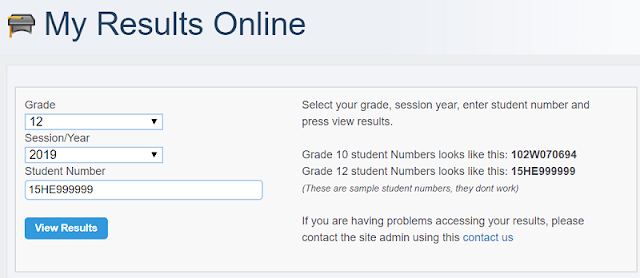
Namibia Ministry of Education | My results Online Home Page

A total of 38,013 full-time grade 11 students sat for the Namibia Senior Secondary Certificate (NSSCO). Another 32,552 sat for NSSCO part-time during the 2023 national examinations. 

The NSSCO Grade 11 and NSSAS Grade 12 are new curricula the Namibian government introduced to all government senior secondary schools in 2021.

At present, exam marking is progressing smoothly and come to completion on the 12th of January 2024. The Directorate of National Examinations and Assessment announce the NSSCO Grade 11 results date as soon as they complete the marking.

Key Facts about Namibia Examinations

  • The Directorate of National Examinations and Assessment and the Ministry of Education, Arts and Culture conduct the annual Grade 11 examinations.
  • Grade 11 students are certified through the Namibia Senior Secondary Certificate Ordinary (NSSCO, new)  Exams.
  • Grades 11 students sat for the examinations in October/November every year. 
  • 2020 was the first year of the NSSCO exams.
  • 2021 was the year when the NEW exam for Grade 11 and Grade 12 (NSSCO and NSSAS)
  • Results are released to students early in February of the following year.
  • The NSSCO Grade 11 Results can be accessed in two ways: either by text message or on the Internet (online results).
  • The NSSCO level is also referred to as Grade 11 (IGCSE). 
  • NSSCO is a two-year course that starts in Grade 10 and ends in Grade 11. 

When is the NSSCO Grade 11 Results Release Date 2024?

In a press conference, the results may come out when all the markings are complete, tentative dates for 2024 are between the 5th and 12th of January 2024. 

Based on last year's and the previous year's experience, the ministry made the announcement in February, and the candidates accessed their results the day after the announcement.

We will let you know when we get any confirmed dates.

Last year's results for the NSSCO Grade 11 Namibia Senior Secondary Certificate Ordinary (NSSCO) level candidates were released this Friday, 18 February 2022.

The results will be made available via print media, text messages and the ministry’s website.

Here are the latest information on the NSSCO Grade 11 Results 2024 release date, statement of results, how to check results online & SMS/phone, statement of results - CLICK HERE


How to Check Grade 11 Results Online

The examination results for Grade 11 NSSCO may be obtained using the online result web application called MY RESULTS ONLINE. 

Accessing the Grade Grade 11 NSSCO results is easier for students and parents/guardians with internet connections. Follow these quick steps for easy access:
  • Launch My Results Online web application on the Namibia Ministry of Education, Arts and Culture. Visit this page
  • Open in a new browser.
  • Follow the example shown in the screenshot shown. (Important: If you have difficulty with login, contact the ministry reps directly for assistance)
  • Select Grade 11 or Grade 12
  • Enter 'Student Numbers'
  • Hit 'Get Results'
Grade 11 results 2024 ONLINE SMS


    Ministry of Education (Namibia)

    Here is what the Ministry of Education (Namibia) had to say about attempting to obtain the final Grade 11 results online.

    Please Note:

    You need to obtain your final results from your school or institution as the Ministry of Education, Arts and Culture shall not be liable for any damages or loss, whether direct or indirect, arising out of the use of or omissions in response to the enquiry made herein or for any consequential damages, loss of profit or special damages arising out of the exam results provided or any use thereof.

    More info:

    More clarity regarding the exam results provided by this service or additional information about your results can be obtained from the:

    Public Relations Officer
    Johanna Absalom
    Contact: 061- 293 3358
    Ministry of Education.

    How to Check Grade 11 Results: SMS

    The examination results for Grade 11 NSSCO can be obtained using an SMS or text message. There are two formats for using short text messaging services: either by name or examination number. 

    If you use the SMS service, your surname, name and results will be displayed on your screen

    SMS using 'name':
    • Go message tab on your phone,
    • Type your: ExamLevel*space*Surname*Space*FirstName
    • Send to 2929, 99099 or 55755 
    (a) Example of Namibia Senior Secondary Certificate Ordinary result for  student Siki Man:  NSSCO Siki Man

    SMS using 'examination number':
    • Go to the message tab on your phone, 
    • Type your: ExamLevel*Space*examination number
    • Send to 2929, 99099 or 55755 
    (b) Example for Namibia Senior Secondary Certificate Ordinary exam results: NSSCO 10HE250025

    Grade 11 NSSCO results 2023 - 2024
    CLICK ON THE IMAGE FOR THE LATEST ON NAMIBIA EXAM RESULTS

    Where to get instructional help

    We found the information on the Namibia National Assessment and Examination very helpful when researching this article. Click Here (My Exam Online). 

    We hope that our visitors from Namibia have found the information useful. Please leave a message below to let us know that you have been here.

    Click on the links for info on the Senior Secondary Certificates for Higher (NSSCH, old) and Ordinary (NCCSO, new) levels and Namibia Senior Secondary Certificate Advanced Subsidiary (NSSCAS, new).

    Namibia has a similar timetable for examinations and the release of Grade 11 results to PNG exams and online results. At this time, many parents and students are visiting this education website. 

    We want to *redirect* our visitors from Namibia, who are checking the 2023 Grade 11 NSSCO Results, to the right result place to access the results. 

    NOTE: We also know that Namibia's education system, especially the examination Grades is undergoing some recent changes. 

    Wish you all the best and good luck. 

    Grade 12 Results 2024 NSSCAS NAMIBIA

    This is an info-service for our Namibia visitors following up on the 2024 Grade 12 results. The recent examinations have been affected by COVID-19 and the leakage of some exam papers. 

    There is good news this year's exams are better. This article puts into perspective the latest news and updates on Grade 12 results 2024. 

    Latest article updated:
    Get the latest info on Namibia Grade 11 Results 2024 release date, statement of results, how to check results online & SMS/phone, statement of results - CLICK HERE


    Grade 12 NSSCO Grade 11 Results 2024
    Article by pnginsightblog.com protected by Our T&Cs Content Stealing/Google DMCA policy

    In brief 2024 Exam Results

    • 2024 exams are better than last year's as there are no major incidences or leakage of exam papers.
    • Grade 12 results for Namibia will come out early in January 2025.
    • According to the latest data, there are a total of 99,631 students registered for the 2024 exams of which 51, 958 are full-time pupils in mainstream schools. These students are directly affected by exam paper leakages.
    • Several subjects in the NSSC Ordinary Level Grade 12 (5 subjects) and the Revised Curriculum Ordinary Level Grade 11 (11 subjects) were affected by the leakage of exam papers in 2021.
    • NSSCO (new) and NSSCAS (new) results will be released on dates intended by the education ministry prior to the examination leakages.
    • The leaked exams are NOT eligible for Cambridge International accreditation in 2024.
    • Candidates will rewrite exams in January 2024. Schools and local education authorities to facilitate the rewrite in collaboration with the education ministry.

    What the exam paper leakages and rewrites mean

    We understand the Teachers Union, private schools and other educational organisations are against the resit (or rewrite) of the examinations leaked early in December 2024. However, the leakage of exam papers has been widespread in the country.

    Understandably, this (the rewrite) is not what many Grade 12 and Grade 11 students would want, but it is in the best interest of the exam and the validity of the results and certificates that the students must resit. 

    The education ministry and Cambridge International understand that the NSSCO and NSSCAS are internationally accredited and recognised certificates. And therefore, the exams must be free of cheating for them to be valid. 


    When are the Grade 12 results in 2024 coming out?

    The Ministry of Education, Arts and Culture (MoEAC), in a news release dated 8th December last year, stated that they will launch the results for Namibia Senior Secondary Certificate Ordinary (NSSCO, new) and Namibia Senior Secondary Certificate Advanced Subsidiary (NSSCAS, new) on the date they set originally. 

    It is not clear when exactly MoEAC will release the results for this year, but based on last year's experience the ministry made the announcement in early February 2024, and the candidates accessed their results the day after the announement.

    That means that the results of 2024 Grade 12 and Grade 11 NCCSO (new) and NSSCA (new) will come out in early January 2024. The education ministry will annouce the results release for as soon as making and final check are completed.

    When is the Grade 12 results in 2024 coming out

    Article by pnginsightblog.com protected by Our T&Cs Content Stealing/Google DMCA policy

    How to access the Grade 12 NSSCA results 2024?

    The examination results for Grade 12 - Namibia Senior Secondary Certificate Ordinary (NSSCO, new) - can be obtained in three ways:

    • by online result web application called MY RESULTS ONLINE,
    • by SMS using your mobile phone, and
    • via print media.

    Grade 12 (and Grade 11) NCCSO and NSSCA results 2023
    Article by pnginsightblog.com

    Meaning of Exams and Results terms

    These acronyms are extensively used in the discussion of examination and results in Namibia. With the new Grade 12 results, we thought you should familiarise yourselves with the terms. 

    Here are the meanings:
    • NSSCO = Namibia Senior Secondary Certificate Ordinary (NEW)
    • NSSCAS = Namibia Senior Secondary Certificate Advanced Subsidiary (NEW)
    • AS Level = First year of a full A level (Advanced Level), Year 12
    • NSSCH = Senior Secondary Certificates for Higher (OLD)
    • CI  = Cambridge International

    Related stories for Namibia visitors

    Recommended articles for Namibia students at Grade 12.


    NESA National Examination 2024 Results - RWANDA

    NESA Rwanda Exam 2024 Results is the work of the National Education and School Inspection Authority of Rwanda. This statutory body organises and runs school inspections and examinations (P6, S3, S6 GE, TVET or TTCand reports on them to the people and govt of Rwanda. 

    IMPORTANT: We are an education blog and do get some visitors from Rwanda and Africa, generally. This article serves as an info-service for our visitors from the beautiful country of Rwanda. 

    Check out the latest on Rwanda's NESA exam results 2024, click here.


    When will NESA national examination 2024 results come out?


    sdms.gov.rw result 2024


    The National Education and School Inspection Authority released the Rwanda NESA result in 2024.

    Meanwhile, students log in to the exam portal or use SMS to get their results for P6, S3, S6(GE), TVET and TTC for 2024. 

    Visit this page for more updates...or check this website for more info on Rwanda Schools and Results.

    The S6 and P6 results should be available anytime from now. 

    If you want to follow-up, go to the:

    • SDMS result page (https://www.sdms.gov.rw/sas-ui/public/nationalExaminationResult.zul), 
    • www.mineduc.gov.rw result 2024 or 
    • use the steps above to check if your results. 

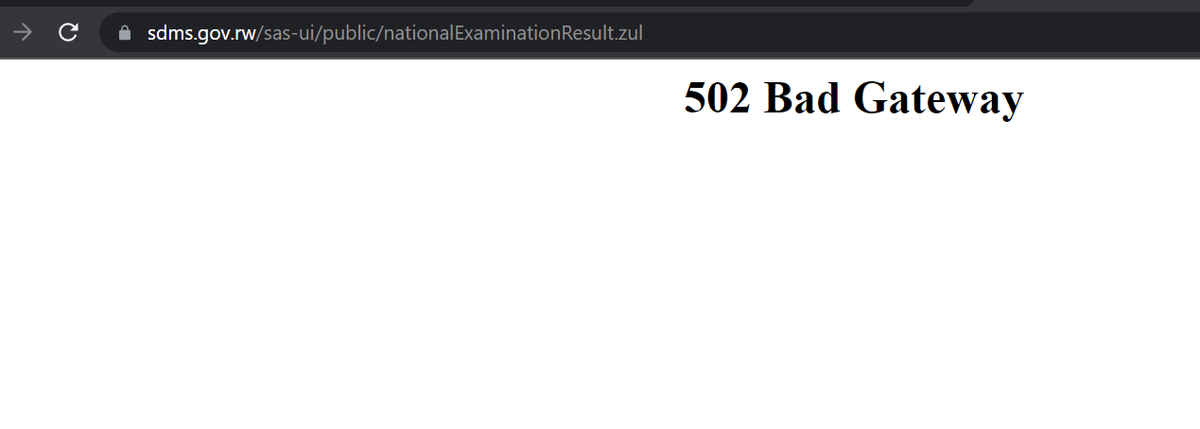
    For the slow 502 Bad Gateway, see below why it happened.


    NESA Rwanda Exam 2024 Results

    The National Education and School Inspection Authority (NESA) of Rwanda has a nice website with up-to-date information for exam takers, schools and other stakeholders.

    If you would like to check your results ONLINE or by SMS, you'll find the steps below helpful.

    www.mineduc.gov.rw result 2024 - nesa national examination 2024 results

    How to Check NESA 2024 Results?

    Go to >>> http://results.nesa.gov.rw

    1. Choose a 'Level' (P6, S3, S6 GE, TVET or TTC),

    2. Enter 'Registration' Number (Your candidate/index number)

    3. Click on the blue 'search button'

    Now your selected NESA National Examinations Results will appear. You can download the result or print it for future use.


    How to Check NESA Rwanda Exam 2024 Results by SMS?

    Students can access their 2024 NESA Rwanda exam results by SMS to 4891.

     P6, S3 and S6 – index number and send SMS to 4891. Here is how to do it:

    1) Open your text message box.

    2) Enter the SMS number: '4891'

    3) Enter 'level' and 'registration number (NO SPACE)

    4) Press 'send'.

    www.mineduc.gov.rw result 2024 - nesa results 2022 s3 rwanda national examination

    There may be a network charge for this service, your results will be sent to your phone. 


    Contact NESA Rwanda

    Contact NESA by email info@nesa.gov.rw or reach the Rwanda Ministry of Education on Twitter via the handle @Rwanda_Edu

    We hope you find this info helpful. If you are coming from Rwanda, please leave a message below and let us know what you think. This will help us to provide the relevant information in regards to the NESA Exam Results from your country.

    We would advise you to check out NESA website for any latest news and updates in regards to the 2024 NESA Exam Results.


    502 Error Bad Gateway

    result login error- www.mineduc.gov.rw result 2024

    If you see the 502 messages, it means a huge volume of traffic is visiting the website at the same time.

    All you have to do is try again at a later time when there is no internet-traffic queue for your chance to log in and check your results. Alternatively, use SMS to get your results.

    How to Check Matric Results 2024 Online and via SMS in January 2025

    What to find out how to check matrics results for 2024? This article will help. Candidates can check their matric results in 2025 online or via USSD and SMS. This year, you can also see your results published in the newspapers.

    This article (linked) provides a step-by-step guide to how to check your Matric Results.

    matric results 2023 release date - www.news24.com matric results isolezwe news today matric results news 24 matric results 2022 news

    When is the Matric result 2024 coming out?

    The Department of Basic Education announced that the national matric results for learners in public schools are expected to come out on the 19th of January 2024 like they did last year (20th January 2023). In fact, the 2022 and 2023 Matric results were released on the same date too. 

    The individual results will be made available online the day after the announcement of the release of the matrics results, 2024.

    Grade 12 students (the Matric Class of 2024) can access their results online or via mobile phone. Also, the results can be collected at your local schools.

    As expected, the Minister of Basic Education Angie Motshekga will announce the outcome of the final exam on the 18th of January 2024.


    A new article is available here for the ''2024 Matric Results Release Dates'' and ''How to Check the Results via SMS/Online'', click here to find out.


    How to check Matric results via SMS and online

    The Department of Basic Education staff and support staff will provide help to students and stakeholders who may face problems accessing their results online or via USSD and SMS. 

    The best way to get help would be to, directly, contact your school or provincial education authority.

    In case you want to get in touch with DBE, send an email to webmaster@dbe.gov.za

    Here are some clear instructions for accessing Grade 12 results online and via USSD or SMS. This article also has links to reliable sources where you can get the latest updates.


    Past updates: 2020, 2021, 2022, 2023

    The updates below are from last year. The dates will give you an idea about when the results came out; and how the Grade 12 students access their results.

    More details via the link 

    • Update #2: The Minister of Basic Education, Angie Motshekga, will announce the release of the 2020 matric results on the 22nd of February 2021.
    • Update #1: Students will be able to access their results on the 23rd of February via SMS, USSD, newspapers or at their examination centres.

    MYIRC Online Services Internal Revenue Commission IRC PNG

    The Internal Revenue Commission is happy to announce the arrival of an exciting new service for our valued taxpayer and public, enter the MyIRC Online Service Platform. This new development has been a long time coming, but it has been developed through a partnership with our financial software technology developer Niupay Limited in the last few months. 

    MYIRC Online Services Internal Revenue Commission IRC PNG

    What are MYIRC Online Services?

    The MyIRC is an online service that enables the following functions that were previously only available at the counter:

    • Payments Online – via scheme cards with all banks and for all tax types
    • Lodgements- Taxpayer will be able to make lodgements online for any particular size of the document, significantly reducing physical counter lodgements and improving workflows
    • Tax Agents Management Accounts – the platform enables Tax Agents to manage their taxpayers online and make payments, lodgements on their behalf as authorized Tax Agents
    • TIN validity look up- TIN’s will be able to be verified online as active or inactive depending on their validity
    • Certificate of Compliance (COC) Look Up – COC’s will now be able to be verified online by paying authorities who have confirmed their identities, and this will significantly reduce COC fraud
    • MyIRC Online Support Centre – Taxpayers, Tax Agents, and registered account holders will now be able to access the support centre and communicate directly with IRC officers for tax-related and general inquiries
    • Other Services – In the coming months, IRC also aims to look into other services such as the online applications for TINs, etc

    Secured cloud platform hosted by Amazon Web

    These services will be performed in a highly secured cloud platform hosted by Amazon Web Services. Our well-architected service will constantly be evolving to meet the needs of the tax administration and taxpayers even post-launch as we strive to ensure we have a system that fully meets the taxpayer’s needs and is internationally asymmetrical with best practices and security accreditation

    In the coming weeks, we will be rolling out our services with a fully enabled service platform available for taxpayers in January 2022. We are honoured to mark this launch occasion with Prime Minister Rt Hon James Marape and celebrate this new service with our loyal taxpayers, whom we aim to best serve through digital technology.

    On behalf of our hard-working staff throughout PNG, I welcome you to the MyIRC Online Service Platform.

    Authorized for release.

    Mr. Sam Koim, OBE

    IRC Commissioner-General

    Media Release: 20th December 2021

    Educational Excellence: Finland's Model of Free and Quality Education

    In terms of global education, Finland consistently stands out as a shining example. Despite having an economy and population one-fifth the size of Australia's, Finnish students routinely outperform their counterparts in nations with far greater resources. 

    This article identifies key factors that contribute to Finland's success, particularly its unwavering commitment to free and quality education. By exploring these elements, we aim to draw insights that can inspire and guide educational development in Papua New Guinea and other small Pacific Island countries.

    Free and quality education Papua New Guinea Finland


    1. Minimal Classroom Hours, Maximum Impact

    One of the most surprising aspects of the Finnish education system is the amount of time students spend in the classroom. Compared to their Australian and Pacific Islanders counterparts, Finnish children log significantly fewer hours, with the minimum in the first grade being only 20 hours per week. 

    However, despite this seemingly relaxed approach, Finnish students consistently rank among the top performers in international assessments. This suggests that quality, not quantity, is the driving force behind their success.


    2. Empowering Teachers and Individualized Curriculum

    Unlike many countries that employ standardized curricula and assessments, Finland empowers its teachers with the autonomy to tailor their lessons to the specific needs of their students. 

    This individualized approach allows educators to incorporate technology, cater to different learning styles, and foster a more engaging and effective learning environment.


    3. Free School Lunches and Equitable Funding

    Finland's commitment to equality is evident in its education system. Schools receive equal funding through taxation, ensuring that socioeconomic disparities do not translate into educational disadvantages. 

    Additionally, students enjoy free school lunches, creating an inclusive atmosphere where everyone has access to nutritious meals regardless of their family's background.


    4. Teacher Qualification and Career Prestige

    One of the pillars of Finland's success is its highly qualified teaching force. Teachers are required to hold a Master's degree, and only a small percentage of applicants are accepted into teaching programs. 

    This rigorous selection process ensures that teaching is a respected and sought-after career, attracting top talent and contributing to the overall quality of education.


    5. Assessment without Comparison

    Finland deviates from the common practice of comparing schools based on exam results. While regular assessments exist, the focus is on self-evaluation within each institution. This fosters an environment where schools collaborate and share best practices rather than compete for limited resources.

    Finnish parents trust the education system, eliminating the need for exhaustive research to find the right school for their child. This trust stems from a societal respect for teachers and the understanding that all schools are equipped to provide high-quality education. This collaborative approach minimizes anxiety and allows parents to focus on supporting their children's learning journey.


    What does it mean for Papua New Guinea?

    While acknowledging the unique cultural contexts of Papua New Guinea and other small Pacific Island countries, there are valuable lessons to be learned from Finland's model. 

    By embracing these principles and incorporating traditional practices, empowering teachers and creating a conducive teaching and learning environment, these nations can build education systems that truly work for their unique landscapes and communities, unlocking the full potential of every child.

    It is about adopting and making the teaching and learning methods suitable for a developing country.


    Conclusion

    Finland's education system serves as a beacon of success, proving that a combination of:

    • minimal classroom hours, 
    • empowered teachers, 
    • equitable funding, and a 
    • strong emphasis on teacher qualifications can create a world-class educational environment. 

    Finland sets a powerful example for the world. By following its lead, nations like Papua New Guinea and other small Pacific Island countries can create a brighter future for their children and contribute to a more equitable and prosperous global community.


    PHASE OUT EXAMS, EARLY CHILDHOOD EDUCATION, FODE, TVET - Why now?

    COMMENTARY: The PNG education system is going through significant changes in 10 years to 2029 as indicated in the new National Education Plan 2029 (NEP). Here are the main points:

    • Phase-out Grade 10 & 8 exams and introduce what is called National Education Quality Assessment Testing.
    • Students will continue to Grade 12 without taking the normal exams at Grade 8 and 10, only 1 exit/exam at Grade 12.
    The education department and the PNG govt want Churches and Private institutions to do more to deliver Early Childhood Education in what it called the Public-Private and Church Partnership. The department noted that Early Childhood Education is NOT its responsibility at present, however it sees Early Childhood learning as an important entry point in education. A cliché?

    School restructure will result in the removal of the Elementary Education Structure and replacing it with Preparatory Schools, prep. A new 1-6-6 structure will come into effect.

    This is the structure that many of (if not you) your parents and grandparents have been through. It is like going back to where we started! So why now? Somebody had got it completely wrong?

    Is removing exams a mistake?

    Removing examinations at Grade 8 and 10 is going to shake the foundation of the Education System in PNG, no doubt. 

    The PNG govt and the education advisors have got it wrong in the past. The 1-6-6 to 2-6-4 to 1-6-6 structural re-adjustment is one example of an unnecessary change. Another example of an unnecessary change in the curriculum change we saw lately, OBE to SBE to OBE.

    There are many other changes that should not have happened - what is happening is a case of destroying what works well. 

    The main reason is that the PNG govt cannot effectively conduct exams - it just costs too much. Furthermore, there are too many students in schools dropping out at Grade 8 and Grade 10 - the govt wants them to have a Grade 12 education. 

    However, these are not good reasons to remove examinations (external assessments) and instead opt for classroom-based assessments. THIS CAN BE THE WORST MISTAKE!

    You see, this kind of assessment will save the govt money, but it is not as effective as it is intended to be. At present, the education department cannot rely on the internal assessment marks schools sent to Waigani. They need an external assessment. 

    Exams and Assessments

    The PNG govt and parents need to know that the education department does *not* have to remove the exam and replace it with another assessment it called National Education Quality Assessment Testing. Both can work side by side. 

    There are already these kinds of literacy and numeracy (L&N)  assessments at Grades 3, 5 and 7 in PNG called PILNA. In Australia, they have the NAPLAN. These are broad-based  (literacy and numeracy competency) assessments that run alongside the main examinations.

    Though these external L&N assessments are different in design and purpose, they are fundamental pillars of measuring learning. 

    Therefore, removing one and replacing it with another IS NOT the right thing to do!

    The Education Structure 1-6-6

    • Prep 1 year, one entry (1)
    • Primary School, Grade 1 to Grade 6 (6)
    • Sec/National High Schools, Grade 7 - 12 (6)
    Indicatively, the 1-6-6 structural adjustment is going to be a huge task.

    The education dept plans to 'park' FODE and TVET in high/secondary schools. That would mean that distance education and technical vocational education will be part of the mainstream schools. A better option for 'absorbing' the high number of students at these levels, but just 'parking' these institutions is not good enough. The High/Secondary schools are not parking areas, they are institutions in their own respects.

    The CCVE curriculum is in line with the PNG's vision and mission embedded in the Constitution - Christian Country.

    In retrospect, a better curriculum teaches the Traditional Ethics & Respect for Elders, Land and Community. CCVE curriculum is absent of the important traditions and cultures of Papua New Guinea. 

    What is Christain education when the local knowledge, languages, respect, war history and traditional cultural practices are neglected and or completely absent from the curriculum?

    NEP2029 must be a practical document, unlike other past 'paper plans'!

    Read the extract from the NEP 2029 below. PNG Insight's Tweets are aimed to add value to this discussion on education planning and development taking place in the country.

    You can find the education apps and directory listings here

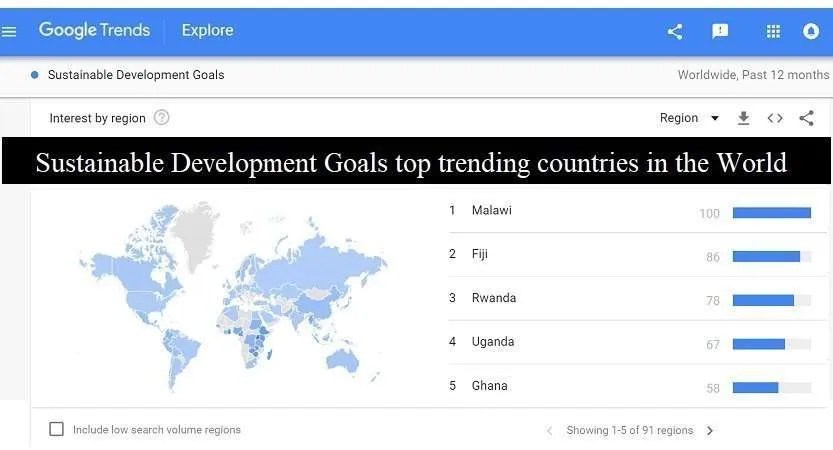
    Fiji is known to have performed really in it Education Goals
    NOTE: Fiji has been able to effectively align the Global Education Goals (MDG 2 and SDG 4) to its local targets - performed extremely well as compared to Papua New Guinea. READ ABOUT IT HERE

    Background

    1. The current NEP 2020-2029 supersedes the NEP 2015-2019.
    2. The development of the NEP 2020-2029 is based on the best-practice and lessons learnt from the implementation of the NEP 2005-2014, NEP 2015-2019, research documents, reviews, Impact Projects, Programs and data from the Education Management Information System
    3. The National Education Plan was completed in January 2020 and then went through several consultation processes before the CoVID 19 lockdown. The plan was finally approved in principle by NEC in its 19th meeting in 2020 and through the NEC decision 347/2020.
    4. Every province will play a critical role in the implementation of the NEP using the same framework. Provinces will develop their 3 Year Provincial Education

    Implementation Plans using the Nine (9) Focus Areas in the NEP 2029

    The nine focus areas in the NEP for the next 9 years are:

    1. Early Childhood Education 

    That all Papua New Guinean children are provided with an opportunity to enrol in an Early Childhood Education program to ensure their full school readiness for entry into the formal education system.

    2. Access

    That all Papua New Guineans have access to 13 years of education and training in a safe and hygienic environment that is conducive to learning.

    3. Equity

    That all Papua New Guineans will have equal opportunity regardless of geographic location, economic circumstances, gender and disability.

    4. Teachers and teaching

    That there will be sufficient well-trained and qualified teachers to meet student demand with resources and support at schools to allow for quality teaching and learning taking place.

    5. Quality Learning

    That an appropriate curriculum and assessment system is in place to allow learners, supported by relevant and sufficient learning materials, to acquire globally comparable skills and knowledge, certificated when appropriate, required for each to lead a productive and healthy life and contribute meaningfully to national development.

    6. Education pathways

    That there are easy-to-access pathways available outside of the traditional post-primary education sector that will allow learners to choose an equivalent, alternative way which to attain the knowledge and skills that they need to lead a happy and fulfilling life

    7. Local management and partnership

    That strong local education leadership at the district, community and school level has ensured well-managed schools, monitored on a regular basis, that are supported by and are fully accountable to the communities that they serve.

    8. Management and administration

    That national, provincial and district systems will operate efficiently, utilising appropriate information technology, that will allow schools and teachers to focus on improved student learning outcomes.

    9. Citizenship and values

    That when children exit from the education system they have a sense of who they are and where they come from in respect of Christian principles, their customs, cultures and beliefs, and show tolerance to and an acceptance of PNG ways

    Major Strategic Features of the NEP 2020-2029

    13 Years of Quality Universal Education: Under this plan, through the school restructure reform, the Department of Education is now taking a bold step to declare 13 years of Universal Education. Children will start at the age of 6 in a preparatory grade and receive a relevant 13 years until they reach grade 12. The move is an exciting and highly significant step forward for PNG as it will see PNG lead in commitments to new global targets.

    One Entry One Exit: Children to complete school at Grade 12 and Grade 12 certificate to be the recognized certificate.

    Restructure of the School Systems: The plan carefully lays out the 1-6-6 school structure which will see elementary education phased out and replaced as Pre School. 

    Key features include the following:

    • Offer 13 years of universal education,
    • One entry at prep and one exit at grade 12.
    • Early childhood will become part of the formal system in 2023 preparing a child for formal schooling at prep grade.
    • Primary education will start at grade 1 and finish at grade 6.
    • High School will start at grade 7 and finish at grade 12.
    • National High Schools to become schools of excellence.

    As the restructure takes effect there will be a need to build new or expand existing infrastructure to cater for additional enrolment. The infrastructure development will happen gradually over the plan period.

    Early Childhood Education

    Early Childhood Education is not at present the responsibility of the DoE but, there is an increasing acknowledgement of its importance and the global call to promote early childhood learning has challenged the department to develop an ECE Policy and to include ECE in this plan. In this plan period, a PNG model for ECE to capture especially the 4 and 5 year olds will take a Public-Private and Church Partnership approach until such time the government takes on board all aspects of all ECE teaching and learning.

    Districts and Churches to partner in delivering Early Childhood Education 

    Qualified and competent teacher: To cater for 13 years of universal education, teachers in all sectors must receive high-quality pre-service programs and further undergo professional development programs through regular in-service. Along with improved teacher quality, factors such as the provision of suitable housing and better administration of teacher conditions and welfare are critical.

    Infrastructure: An important aspect of quality is adequate school infrastructure. There are many schools in the country that do not have this and the Plan required a significant commitment from all parties, including different levels of Government, schools themselves and local communities, to improve this situation. More than just classrooms, the Plan also required specialist buildings to reflect the importance being afforded the STEM disciplines. It is impossible to know just how much has been done because records are not kept. A start has been made on encouraging sound Water, Sanitation Hygiene (WaSH) practices.

    Standards-Based CurriculumOutcome-based Education has been phased out and replaced with Standards-Based Education. The standards-based curriculum will be used in all schools. An attempt to harness the power of the digital age in this plan will see the production of the curriculum in electronic forms for e-learning. 

    Citizenship and Christian Values Education (CCVE): Implementing CCVE curriculum will pave the way forward for children to be taught life-changing and guiding Christian principles values and ethics

    Education Pathways: To achieve Universal Education, students need to be able to choose the most suitable pathways to their needs. This plan looks at developing and promoting an understanding among parents and students for TVET education pathways, purpose and routes to employment. Strengthening the FODE system and linking FODE and TVET will provide a viable option for students’ movements between the education pathways.

    Flexible, Open & Distance Education and Technical, Vocational Education Training: FODE and TVET to be parked in a High School or Secondary School in 2021 and onwards. Provincial Governments and Districts to ensure at least one local level Government has a high school.

    General Features Education in Papua New Guinea 2029

    Equity

    Despite the progress that has been made in providing education to an increasing number of children and young people, not all Papua New Guineans have been able to benefit fully from these advances. It has long been acknowledged that girls and women have been at a disadvantage. 

    This NEP has put in place strategies to try and ensure that girls are given equal opportunities to participate in education and to contribute equally to national development. Equity also takes into account the plight of three other groups of people who have been let down by the formal education system. 

    First are those who have special needs and who are not able to take their place in the regular school system. An inclusive education plan has been developed and endorsed with this group in mind.

    Second are the children and young people who have been left behind, either because they have never been to school, or have dropped out for whatever reason prior to completing basic education. 

    Third are the children from the most rural and remote parts of the country where the schools face their own particular problems.

    Examination and Assessment

    The current grade 8 and 10 examinations will be used for measuring standards and not for selection while the National Examination at Grade 12 will be for selection into tertiary institutions for all students (in mainstream schools, permitted schools, FODE and TVET institutions). This will be achieved over time. 

    It will be mandatory for students to sit for the National Education Quality Standards Assessment Test to monitor curriculum and teacher standards.

    Language of Instruction

    English will be the language of instruction for all schools in the national education system.

    Minimum Operating Standards.

    There will be standards set on school sizes, class sizes, and teacher to student ratio for each level of education. These standards will determine the establishment of the new school, approval of additional classes and creation of teaching positions.

    Leadership and Partnership

    Emphasis is also on School Leadership so that there are good school planning and management. Community and Parental Support is also an essential part of this plan. 

    The government will continue to support schools through subsidies and grants. All schools to develop School Learning Improvement Plan (SLIP).

    PNG Insight has been following the major developments in education in Papua New Guinea for over 10 years. You can find my work here: Education Policies

    New police clearance certificate with security features launched (MEDIA STATEMENT)

    The Police Crimes Division launched on Monday a new police clearance certificate with security features.

    Assistant Commissioner Crimes Hodges Ette said the issuance of the new certificates will prevent false police clearance certificates from being issued. The new Police Clearance Certificate which was launched at the Crime Division conference room at the police headquarters in Port Moresby was witnessed by senior police officers as well as staff from the Crimes Division and Interpol.

    Mr Ette said the new police clearance certificate came into effect on Monday 15 November. Certificates issued prior will remain valid until March 2022. He said the RPNGC is changing the old police clearance certificate that has been used for the last 46 years since independence.

    “The old format of producing police clearance certificates has been abused, and fraudulently used. People are printing them outside of the actually established system. We have fraudsters producing police clearance certificates fraudulently. The constabulary has been accused of facilitating or fraudulently producing false documents,” Mr Ette said.

    Mr Ette however said that the police clearance certificate was previously done at a small administrative fee of K10.00 which was increased to K65.00 this year. He said Police make about K9,000.00 per day especially from the applications received in the National Capital District. He added that so far this year the Constabulary was able to collect K800,000.00 in police clearance fees.

    “This particular certificate comes in three categories one for citizens, another one for expatriates and we also developed for PMVs as well. I am sure Motor Vehicle Insurance Limited (MVIL) and the transport sector will also be interested,” Mr Ette said, adding that certain categories would be put in with a reasonable fee at a future date. For instance, a person trying to get a job as a security guard will pay K65.00 but if they are trying to become the head of a government department they may pay up to K1,000.00 for the certificate.

    Mr Ette said police are in the process of developing a work based system that can be accessed anywhere in the country. This system will also be of interest to various stakeholders including the National Statistical Office (NSO), Foreign Affairs and others.

    Mr Ette said the new certificate with the security features will cost zero Kina to develop.

    ROYAL PAPUA NEW GUINEA CONSTABULARY

    MEDIA STATEMENT/Facebook

    Tuesday 16th November, 2021

    Read about How to Obtain Police Clearance Check


    Grade 12 Students SLF Grace Period - Why GP is Important

    The DHERST Grace Period offers a unique opportunity for current Grade 12 students to make informed decisions for their School Leavers Form (SLF). Unlike previous years, students can now adjust their choices based on their exam marks during this period. 

    NOAS Application Eligible Programs During the Grade Period

    DHERST Online Application 2024 (NOAS LOGIN) 

    DHERST Online Application System (NOAS) The National Online Application System (NOAS) significantly enhances the selection process. It provides students with upfront clarity by highlighting ineligible options in red, minimizing the risk of mistakes. Students can make up to five choices, increasing their chances of getting into a tertiary institution. 

    Previously, the manual SLF allowed only three choices and did not permit changes after submission. Grade 12 students should maximize the Grace Period to secure a spot for 2024 at a tertiary institution. 

    CLICK HERE to know the latest on 2025 DHERST TESAS LIST PUBLICATION DATE

    Key Dates (expected) 2024/2025

    The following important dates are crucial for examinations, results, and selections in Papua New Guinea: 

    • Mid-December 2024: DHERST launches the 2024 selection for the 2025 academic year. Early-December 2024: NOAS Grace Period. 
    • Second Week of December 2024: The Education Department, through MSD, releases Grade 12 Exam Results to DHERST. 
    • First Week of December 2024: Grade 10 and 12 Exam Results are launched. 
    • Late November 2024: Education Officers/GES start 2024 Grade 11 Selections. These dates are based on previous years and may vary slightly. 
    The 2024/2025 Grade 11 selection lists are likely to be released in the second or third week of December 2024. 
    DHERST Online Application 2023 (NAOS)

    Importance of the Grace Period 

    The Grace Period lasts five days, during which Grade 12 students should adjust their choices. DHERST will indicate eligibility on NOAS based on examination marks. 

    Here’s what DHERST says about the importance of the Grace Period: 

     "This [Grace Period] is a crucial period where you will start making your choices based on your final grade 12 results. Ensure to access your account during the mentioned dates. If you see a red highlight in any of your five choices under 'My Choices,' this means your final result has not met the minimum program requirement set by the institution. Therefore, you must change the red highlighted choice to a different program available in your program list."

    The online selection is quick. Grade 12 students have around five days to adjust their choices to more suitable ones. DHERST will not grant access to make changes after this period. The Grace Period's due date is final. 

    Launching 2024 Selections for the 2025 Academic Year 

    The online selection via DHERST's National Online Selections System (NOSS) is efficient, completing the process in just three days. 

    DHERST may launch the 2024 selections for the 2025 academic year the week following the Grace Period’s due date, likely on the following Tuesday, based on past trends. If all goes to plan, students will see their selection status by the announced date. 

    Checking Your 2024 Grade 12 Exam Marks 

    By now, students should know their Grade 12 exam marks, accessible through the My PNG Exam Results website. Note that DHERST does not display Grade 12 students' exam marks. 

    NOAS, administered by DHERST, facilitates national admissions and selections into higher education institutions in Papua New Guinea. It primarily serves Grade 12 school-leaver applications. 

    Non-School Leaver Applicants Non-school leaver applicants must contact their chosen institutions directly and follow the respective application requirements. 

    For further information, please contact DHERST Support Service at noassupport@dherst.gov.pg. 

     Stay informed and proactive to make the most of this critical period in your academic journey.
    Firstly, the National Online Application System (NOAS) gives the students the right choice upfront by highlighting (in red) the 'ineligible' options. 

    resources:

    • The latest dates for exam results and selections are now available here.)
    • By now, you should know your Grade 12 exam marks. The marks are accessible through My PNG Exam Results website.

    POST A COMMENT.

    SEARCH THE ENTIRE SITE HERE

    Public Holidays in PNG 2025

    Public Holidays in PNG 2025
    CLICK ON THE IMAGE TO GET THE LATEST INFORMATION